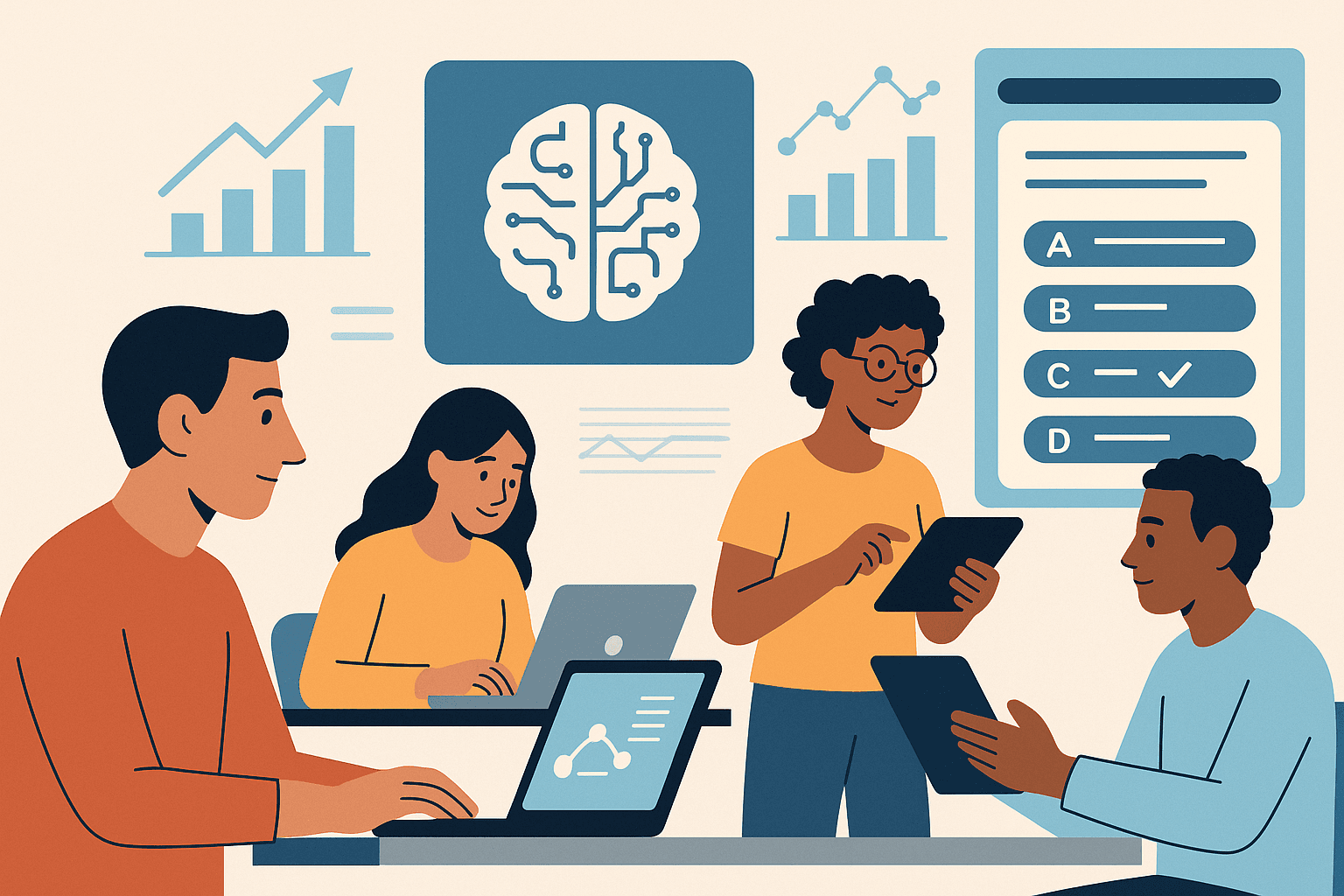
AI in Assessment: Transforming Higher Education
In the evolving landscape of higher education, assessment stands as one of the most critical elements in measuring student success and guiding educational outcomes. Yet, traditional assessment methods often fall short in capturing the full spectrum of student capabilities. Enter artificial intelligence (AI), a technological force that holds the promise to transform how we evaluate learning. By re-imagining assessment with AI, universities have the opportunity to enhance educational relevance, innovate practices, and ultimately, better prepare students for the future.
The Need for AI in Modern Assessment
The conventional modes of assessment - exams, essays, and projects - have served their purpose but are increasingly inadequate for the diverse skill sets required in today's world. AI offers a fresh lens through which we can evaluate students more holistically. It can provide immediate feedback, personalise learning, and offer insights that are not feasible with traditional methods. AI's capacity to analyse vast amounts of data quickly and accurately makes it an invaluable tool for educators aiming to understand student needs better and tailor teaching strategies accordingly. For more on AI's impact on education, the BBC provides insightful coverage.
Practical Implications for Universities
Personalised Learning Paths
AI can analyse a student's performance over time and suggest personalised learning pathways. This can help educators identify strengths and weaknesses, allowing for targeted interventions that can support student success.
Real-Time Feedback
Unlike traditional assessments that delay feedback, AI-driven tools can provide immediate insights. This immediacy can empower students to understand their mistakes and learn from them in real time, enhancing the learning experience.
Broader Skill Evaluation
Current assessments often focus on rote memorisation and standardised testing. AI can evaluate a wider range of skills, including critical thinking, problem-solving, and creativity, by analysing student interactions with various digital tools and platforms.
Reducing Bias
Human bias is an inherent risk in assessments. AI, when correctly programmed and monitored, can offer a more objective evaluation free from unconscious bias, thereby promoting fairness in student evaluations. For further reading on reducing bias in AI, UNESCO offers comprehensive resources.
Opportunities for Innovation in Education
Adaptive Assessments
AI can facilitate adaptive testing that adjusts in difficulty based on a student's performance. This ensures that assessments are challenging yet attainable, accurately reflecting a student's understanding and capabilities.
Simulation-Based Learning
AI can support the development of simulation-based assessments that mimic real-world scenarios. This is particularly beneficial in fields such as medicine, engineering, and business, where practical application of knowledge is crucial.
Data-Driven Decision Making
With AI, universities can harness data analytics to inform policy decisions and curriculum design. Understanding how students interact with assessments can guide improvements and innovations in teaching and learning strategies. The Times Higher Education website discusses how data-driven insights are shaping modern academia.
Challenges and Ethical Considerations
While the potential of AI in assessment is vast, it is not without challenges. Educators and policymakers must consider issues such as data privacy, the digital divide, and the need for robust AI literacy among staff and students. There is also the risk of over-reliance on technology, which could overshadow the human elements of teaching and learning.
Furthermore, ethical considerations must be at the forefront of AI implementation. Universities must ensure that AI tools are transparent, fair, and inclusive. Regular audits and assessments of AI systems are essential to maintain trust and integrity in the educational process.
A Thoughtful Path Forward
The integration of AI into assessment is not a distant future concept; it is a present-day opportunity. Universities must approach this innovation thoughtfully, balancing the benefits of AI with the critical human elements that define education. By embracing AI, higher education institutions can not only enhance the assessment process but also lead the way in preparing students for an AI-driven world.
As we re-imagine assessment with AI, we invite education professionals to engage in this conversation, share insights, and collaborate on building a future where technology and education work hand in hand to empower every learner. This is a call to action for universities to not just adapt, but to lead in the transformation of education through the intelligent use of AI.
In doing so, we can create a more dynamic, equitable, and effective educational environment that truly reflects the diverse talents and potentials of our students. Let’s take the first step together towards transforming assessment in higher education with AI.